If you are choosing between a historic estate and a newer luxury home in Bedford, you are not just comparing style. You are weighing character, flexibility, maintenance, and timing in one of Westchester’s most sought-after upper-tier markets. The good news is that Bedford offers strong options on both sides, and understanding the tradeoffs can help you make a sharper, more confident decision. Let’s dive in.
Bedford luxury market at a glance
Bedford continues to attract luxury buyers who want space, architectural distinction, and a setting shaped by preservation and acreage. The town notes that it includes two nationally recognized historic districts and a wide range of homes, from colonial-era farmhouses to postwar modern residences.
Market data supports that long-term appeal. Bedford’s single-family market closed December 2025 with a median sale price of $1,512,500, an average sale price of $2,170,581, 22 closed sales, 65 average days on market, and 1.2 months of inventory. Sellers received 103.26% of list price, and the town’s median sold price rose from $772,500 in 2016 to $1.35 million in 2025.
A March 2026 market snapshot described Bedford as balanced but still tight, with 12 homes for sale, a median listing price of $1.94 million, a median 53 days on market, and a 101% sale-to-list ratio. At the county level, luxury sales at $2 million and above rose 17.5% in 2025, with demand especially active in the $2 million to $5 million range.
Historic Bedford homes offer scarcity and identity
For many buyers, Bedford’s historic homes are the reason to be here in the first place. The town’s architectural survey shows a broad mix of styles, including Georgian, Colonial Revival, Beaux Arts, Tudor Revival, Neoclassical, Craftsman, International, vernacular farmhouses, and postwar modern homes.
In Bedford Village, many historic properties reflect Colonial style, which helps create the area’s distinctive visual identity. The historic district dates to the town’s founding in 1680 and includes the Village Green, a colonial graveyard, and the Old Court House.
What makes these homes compelling is not just age. It is the sense of proportion, craftsmanship, and setting that is hard to replicate. A current historic example in Bedford Hills, dating to 1906 and set on nearly 17 acres, includes traditional Colonial and Beaux-Arts design, gracious living rooms, five working fireplaces, a grand staircase, and a separate artist’s studio.
What historic ownership can mean for you
If you buy a historic home in Bedford, you may be buying into a more structured ownership experience. In the Bedford Village Historic District, exterior improvements are reviewed and approved, and historic properties outside the district can also fall under local review depending on their designation.
That does not mean historic ownership is a negative. It means you should expect preservation standards to shape what changes are realistic, how long approvals may take, and how closely your plans need to align with the home’s existing character.
Exterior changes may be more limited
Bedford’s guidelines place clear emphasis on preserving original character. Paint colors should generally remain the same, windows and doors should match original size and style, wood windows and divided-light patterns are preferred, and low wood or stone fences are expected at street frontage.
Even landscape changes can matter. Mature-tree removals or certain plantings may require review, and additions should be compatible with, but differentiated from, the original structure. The town encourages early consultation with the commission, which is a smart step if you are considering any visible work.
New builds favor layout and convenience
Bedford’s newer luxury inventory tends to look very different from a typical suburban subdivision. Based on current examples and the town’s architectural history, newer homes here are usually custom or semi-custom estates rather than standardized tract housing.
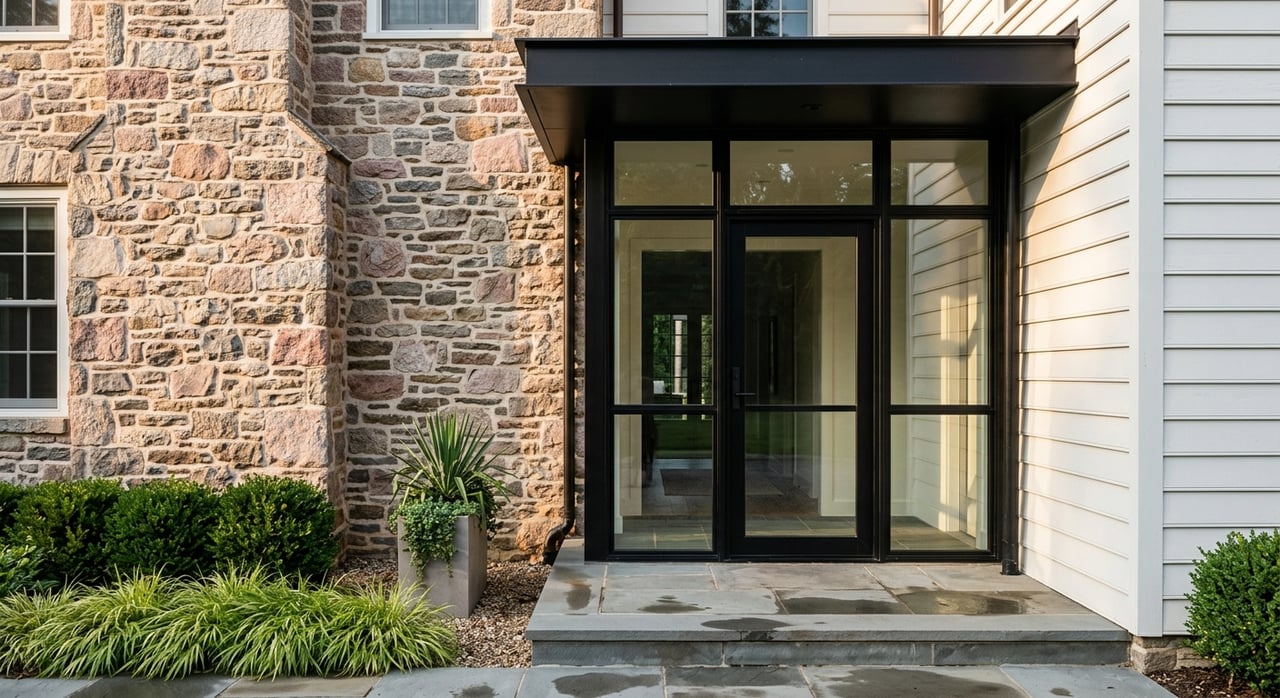
That matters because many new homes in Bedford are built to satisfy today’s luxury expectations while still borrowing from traditional estate language. You often see stone facades, reclaimed materials, high ceilings, and a blend of formal and informal spaces instead of a purely ultra-modern design.
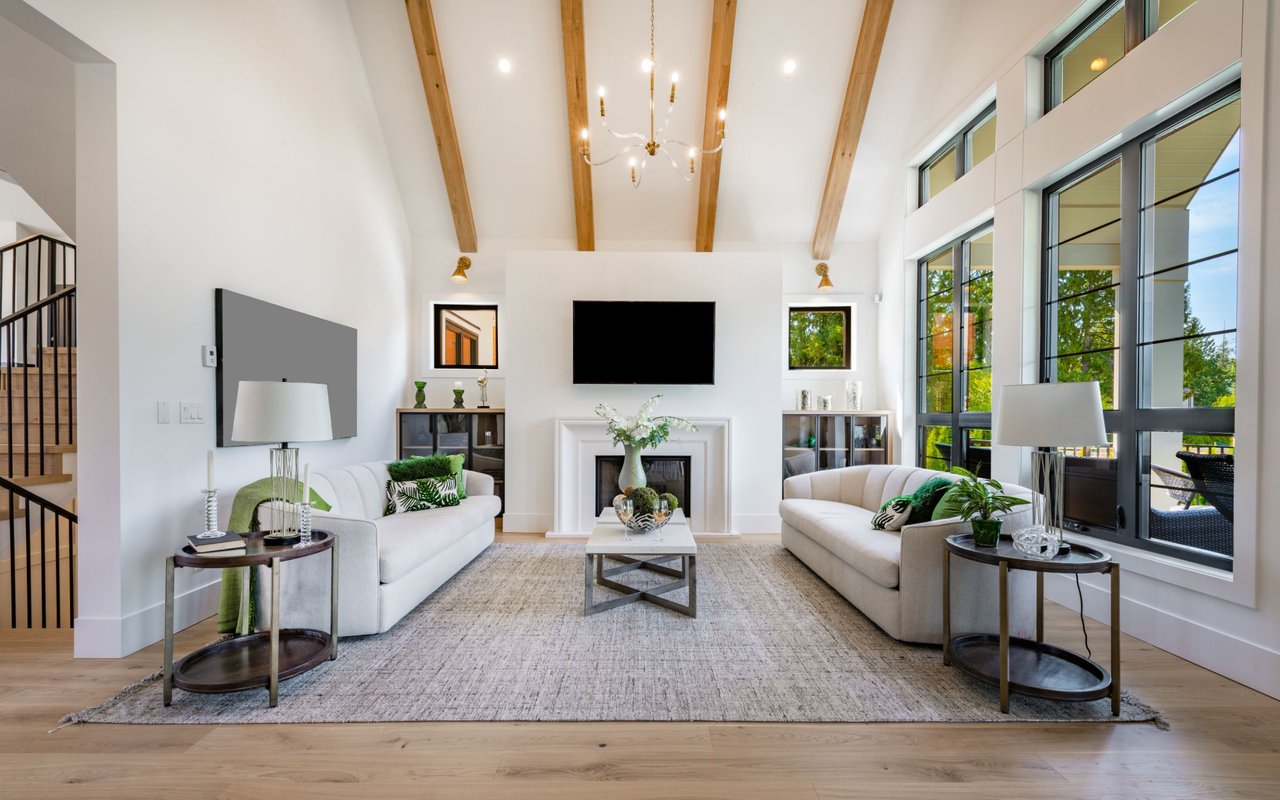
A 2026 custom home on Guion Lane is a clear example. It was designed around open-plan living, with a kitchen that flows into dining and family spaces, a cathedral-ceiling family room, ensuite bedrooms, a finished walk-out basement, a mudroom, and a wraparound patio.
Another Bedford estate built in 2009 was described as balancing traditional character with modern livability through a stone facade, reclaimed beams, a chef’s kitchen, an office wing, and outdoor entertaining areas. For many buyers, that combination is the point: classic presentation with a more turnkey daily experience.
Why newer homes often feel easier
In practical terms, newer homes are usually easier to own if your priority is convenience. You are more likely to find layouts that match current expectations for open kitchens, home office space, mudrooms, ensuite bedrooms, and integrated indoor-outdoor living.
You may also face fewer preservation-specific restrictions than you would with a historic property. That can make cosmetic changes, updates, and future planning feel more straightforward, even though local permits still apply.
Bedford permits still matter for new construction
A newer home does not mean a no-rules home. Bedford’s Building Department requires permits for new builds, additions, demolition, renovations, replacement windows, roofs, tree removal, and more.
The town reviews plans and conducts inspections throughout the project, and work cannot begin until a permit is issued and posted. For larger or structural work, applicants may need site plans or surveys, stamped plans, and an Energy Conservation Code Affidavit for new construction and most renovations.
Permits also expire after 18 months if work has not started. So if you are considering a home that is under construction, recently approved, or intended for expansion, timeline discipline matters.
Historic charm vs new build: key tradeoffs
The real Bedford decision is usually not old versus new in the abstract. It is scarcity and architectural identity versus convenience and predictability.
Historic homes can offer preserved settings, rich materials, and room sequences that feel rooted in another era. Newer homes can offer modern systems, flexible layouts, and a more turnkey lifestyle. Both can perform well in Bedford’s active luxury market, but they appeal to different buyers for very practical reasons.
| Factor | Historic Bedford Home | Newer Bedford Home |
|---|---|---|
| Character | Often highly distinctive and tied to period architecture | Often designed to echo tradition with newer finishes |
| Layout | May have more formal room sequencing | Often built around open-plan living |
| Exterior changes | More likely to face preservation review | Usually fewer preservation-specific constraints |
| Maintenance planning | May require more specialized upkeep | Often easier to manage day to day |
| Timeline certainty | Renovations may involve added review steps | Projects still need permits and inspections |
| Turnkey feel | Varies widely by condition and prior updates | More likely to align with current luxury expectations |
What to compare before you bid
Before you move forward on either type of property, focus on the details that affect ownership after closing. Bedford’s market remains competitive enough that it helps to know your non-negotiables before emotions enter the picture.
Review your renovation appetite
Ask yourself how much work you truly want to manage. If you love craftsmanship and legacy architecture, a historic home may be worth the extra planning. If you want a smoother path to occupancy, a newer home may fit better.
Check change limitations early
With historic properties, exterior choices may not be entirely yours. Windows, paint, fencing, additions, and even some landscape work can trigger review, so it is wise to understand those rules before you assume a future redesign is simple.
Match the layout to daily use
How you live should guide your decision. If you want formal entertaining rooms, original millwork, and a more segmented floor plan, an older estate may be a strong fit. If you prioritize connected kitchen-family space, home office functionality, and easy indoor-outdoor flow, newer construction may better match your routine.
Consider timeline risk
If you need certainty, study the approval and construction path carefully. Historic homes can bring additional review complexity, while new homes and major renovations still move through Bedford’s permit and inspection process.
Evaluate price through long-term use
In Bedford, either category can command a premium depending on location, acreage, architecture, and condition. That is why a finance-first approach matters. You are not just buying square footage. You are buying a certain ownership experience, a future capital plan, and a property’s position within a tight luxury market.
Which Bedford luxury home is right for you?
If you value rarity, preserved settings, and architectural depth, Bedford’s historic homes can be compelling in a way newer properties often cannot fully copy. If you value easier living, contemporary flow, and fewer design constraints, a newer custom estate may be the stronger fit.
Neither option is automatically better. The right move depends on your tolerance for approvals, your timeline, your design goals, and how you define long-term value. In a market where well-positioned luxury homes continue to draw demand, clarity on those points can give you a real advantage.
Whether you are comparing a Colonial-era property, a Beaux-Arts estate, or a newly built custom home, a disciplined review process can help you avoid expensive surprises and move with more confidence. If you want discreet, data-driven guidance on Bedford luxury homes, William Martin offers private, investment-grade consultation tailored to your goals.
FAQs
What is the main difference between historic and new luxury homes in Bedford?
- Historic homes usually offer more architectural character and a more preserved setting, while newer homes often offer more flexible layouts, modern systems, and a more turnkey feel.
Do historic homes in Bedford face more rules for renovations?
- Yes. In and around Bedford’s historic areas, exterior changes such as windows, paint, fences, additions, and some landscape work may be subject to review.
Do new homes in Bedford still need permits?
- Yes. Bedford requires permits for new construction, additions, demolition, renovations, replacement windows, roofs, tree removal, and other work, with plan review and inspections throughout the project.
Are newer luxury homes common in Bedford?
- Bedford’s newer luxury inventory appears to be mostly custom or semi-custom estate homes rather than tract housing, often blending traditional materials with modern layouts.
Is Bedford still a strong market for luxury homes?
- Recent data points to continued demand, with tight inventory, sale-to-list ratios at or above asking in some reports, and rising luxury sales across Westchester.
Which Bedford home type is easier to own day to day?
- In general, a newer home is often easier to own because it usually has fewer preservation-specific constraints and is more likely to match current living preferences.